
Hardscaping
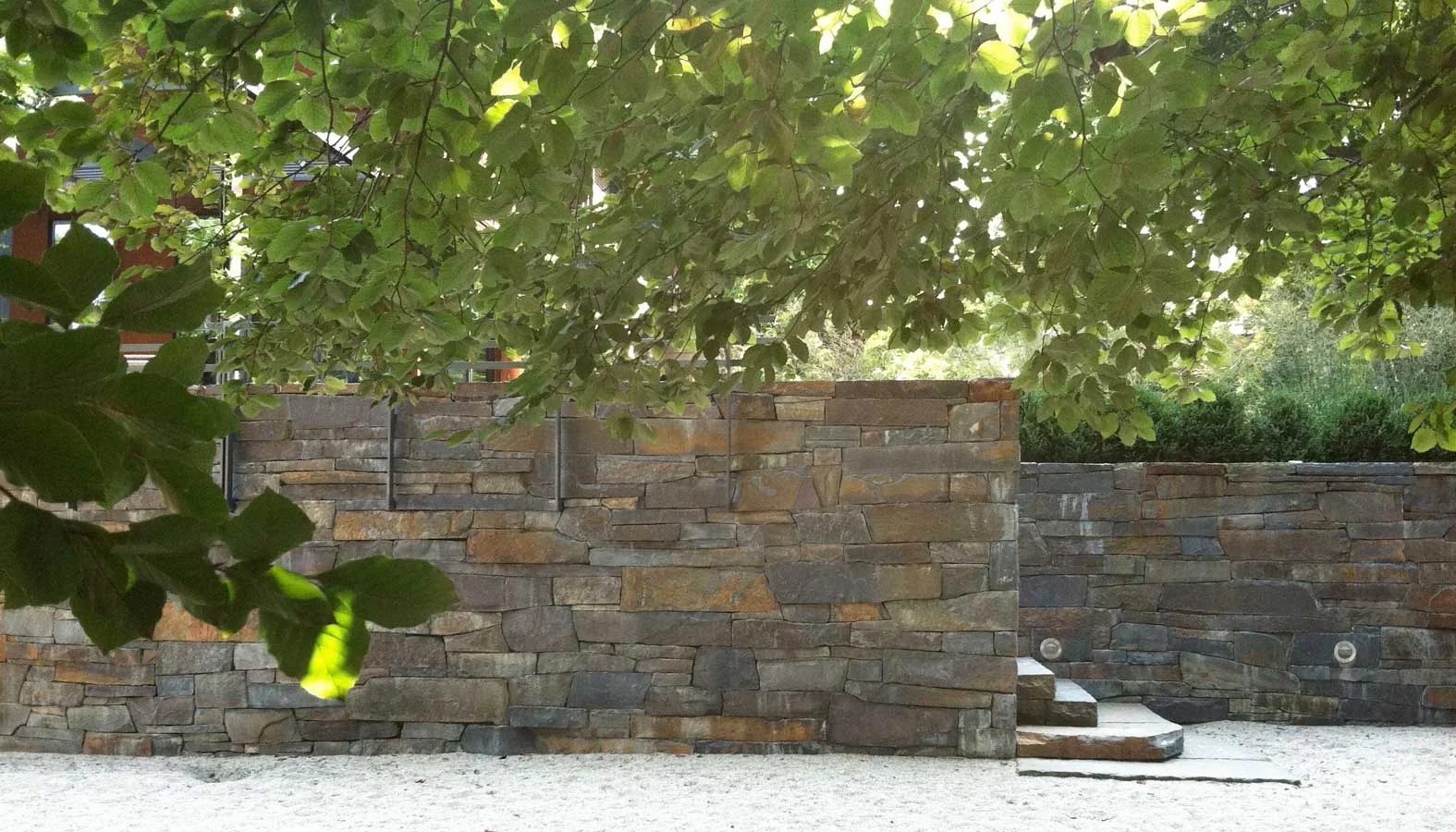
Patios, Walls and Walkways Built to Handle New England Winters
We build patios, walkways, retaining walls and outdoor living spaces for homes in Weston, Newton, Wellesley and the surrounding towns. In New England, good hardscaping depends on the base and drainage underneath. That’s how you prepare a hardscaping project that won’t fall apart after many harsh winters. Experience matters.
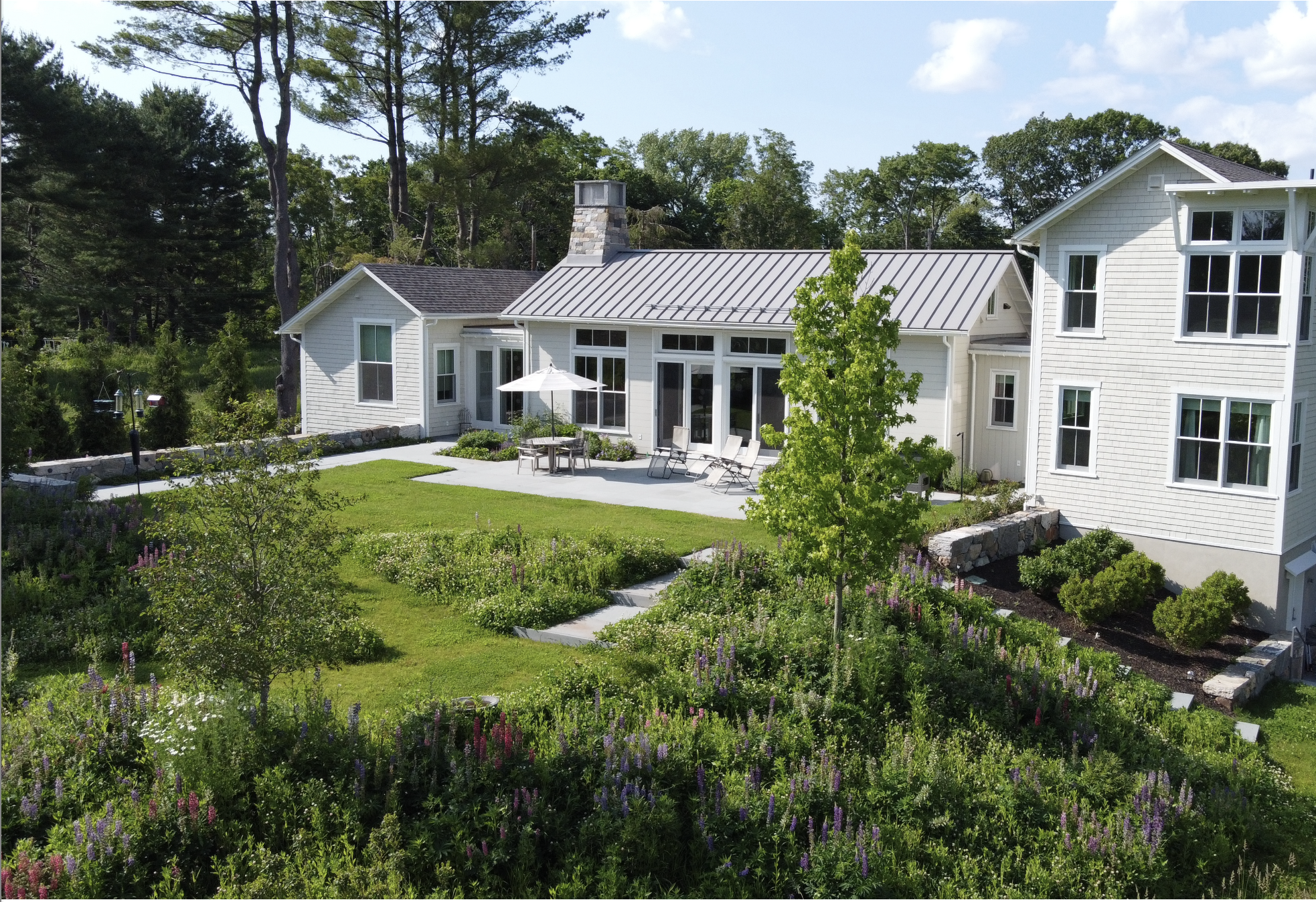
It Starts With the Base
Most hardscape problems in New England come from below the surface. When a base is too thin, or isn't compacted in layers, freeze and thaw cycles gradually shift it. A few winters later, joints open, edges spread and water collects where it used to drain.
We excavate to the right depth, build and compact the base in layers, and plan where the water will go before any stone is set. None of it shows when the job is finished, and all of it shows over the years that follow.
Planned as a Whole
A patio, the wall holding its grade, the drainage underneath and any lighting all depend on one another. We plan the full footprint before anything is built, so each piece fits with the next and nothing needs to be cut in later.
What We Build
- Patios and walkways in Techo-Bloc, Unilock and Belgard pavers, or bluestone, granite and New England fieldstone
- Retaining walls that turn a slope into usable yard, with proper drainage behind them
- Outdoor living, including fire pits, seating walls, pergolas and outdoor kitchens
- Landscape lighting in solid brass and copper, planned during construction
- Drainage and grading for wet yards and water running the wrong way
- Excavation and site work, the preparation everything else depends on
Care for the Rest of the Property
Established properties have mature trees and lawns that took years to fill in. Our equipment fits through a standard side gate, and we plan the access route and lay down protection before work begins.
Where roots run through a planned footprint, we adjust the layout. Anything disturbed during the work is repaired as part of the job.
Working With Architects and Designers
If you're working with a landscape architect, we're happy to build from their drawings. Send us the plan and we'll price it, review it against your site and keep the architect informed through the build.
What Shapes the Price
Square footage, material choice, access to the back yard, the amount of excavation and grading, and whether steps, walls or lighting are included. A front walk and a large patio with a seating wall are very different projects, which is why we price after walking the property.
During the site visit, we'll explain what's driving the number and where scope can be adjusted. That might mean pavers out back and bluestone at the entry, or phasing the work across two seasons. The base underneath is the one place we don't cut back.
Common Questions
How long does hardscape last?
Decades, when the base is built well, and natural stone lasts far longer than that. When hardscape fails, it's almost always the base or drainage rather than the stone itself.
Can you repair rather than replace?
Often, yes. A settled section, a bowing wall or washed-out joints can frequently be corrected by lifting the affected area, fixing what's underneath and resetting the same material. It's worth having us take a look before replacing anything.
When is the best time of year to build?
April through November, whenever the ground is workable. Spring books first, so calling over the winter gives you the most scheduling flexibility.
Do I need a permit?
Ground-level patios generally don't need one. Retaining walls above a certain height do, and walls over four feet need an engineered design. Work near wetlands requires conservation review in every town we serve. We identify all of this during design.