
Irrigation & Sprinkler Systems
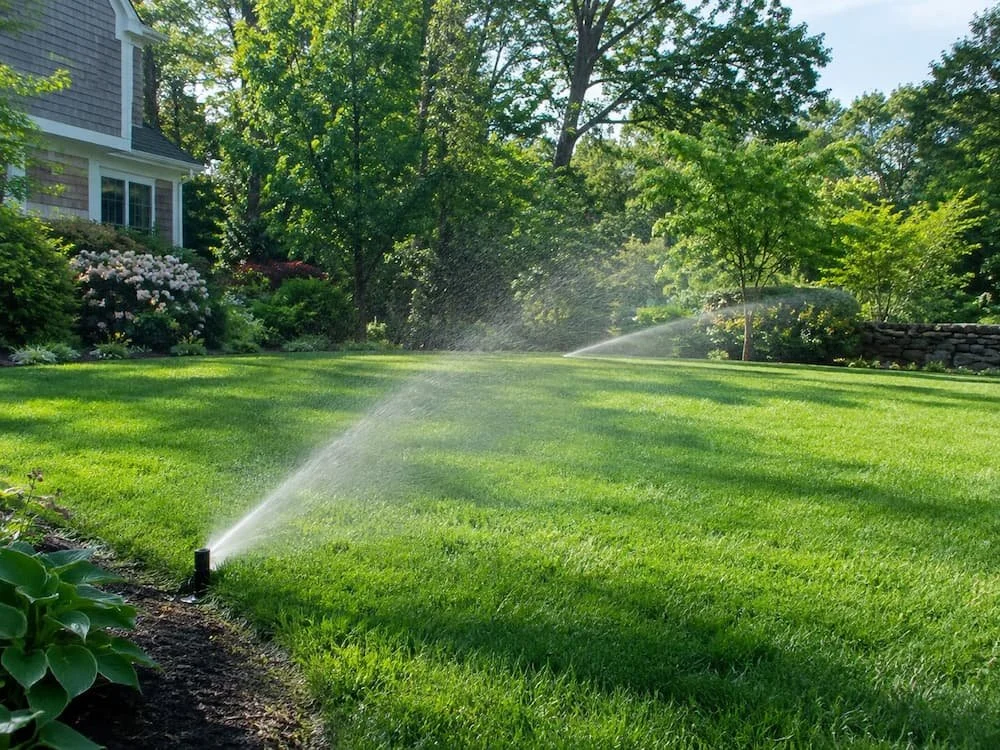
Sprinkler Systems Designed, Installed and Cared For Through Every Massachusetts Season
A well-designed irrigation system waters each part of the property according to what it needs, adjusting for sun, soil and rainfall. We design and install sprinkler and drip systems, and we service, repair and winterize systems no matter who installed them.
Get in touch and we'll walk the property or get your system on the schedule.
Good Design Starts With Zoning
Areas with different water needs belong on separate zones, so each gets the right amount. A sunny lawn dries out much faster than shaded lawn under mature trees. Beds prefer deeper, less frequent watering than turf. Slopes need shorter, repeated cycles so water soaks in instead of running off, and clay holds water far longer than sandy soil.
We design zones around what the property actually contains before any pipe goes in the ground.
What Goes In
- Rotors for open lawn, covering a wide area
- Spray heads for smaller and irregular areas
- Rotary nozzles that apply water slowly, suited to clay soil and slopes
- Drip line in beds and containers, delivering water at soil level with no wasted spray
- Smart controllers that adjust to the weather rather than running a fixed schedule
- Rain sensors, standard on every system we install
Installation is less disruptive than most people expect. Pipe is pulled through the ground with a vibratory plow rather than trenched, leaving a narrow slit that closes within a couple of weeks.
Set Up for Deep, Infrequent Watering
Light daily watering keeps moisture in the top inch of soil, so roots stay shallow and the lawn struggles in dry spells. Longer cycles run less often encourage deeper roots. Early morning is the best time to water, with less evaporation than midday and leaves that dry during the day, which helps prevent fungal disease. We program systems to make that easy.
Local Water Restrictions
Most towns in the area set outdoor watering restrictions in summer, which vary by community and by year depending on drought conditions, often limiting watering to certain days and hours. A smart controller makes it simple to follow the rules, and we set each one up with your town's guidelines in mind, so the system stays compliant without anyone having to remember the schedule.
Spring Startup
Sprinkler heads shift over the winter. Frost lifts them, mowers clip them and plants grow over them. A proper startup means pressurizing the system slowly, running every zone and checking each head, adjusting spray patterns, cleaning or replacing clogged nozzles and programming the controller for the season.
Fall Winterization
Water left in pipes, valves and backflow devices freezes and expands, which can crack fittings, split pipe and damage the backflow assembly, one of the most expensive parts of the system. We shut off the supply, drain what will drain and blow compressed air through each zone at a controlled pressure until the lines are clear. The timing is before the first hard freeze, typically late October into November.
Repairs and Service
- Broken and clipped heads, the most common repair
- Line breaks from digging, frost or roots
- Valve problems, when a zone won't turn on or won't shut off
- Wiring issues between the controller and valves
- Coverage problems that leave dry areas
- Controller replacement, often with a weather-based smart controller
A dry patch that keeps returning usually points to coverage, a soggy area that never dries suggests a leak, and a sudden jump in the water bill often means a break underground. These are worth addressing quickly.
Backflow Prevention and Testing
Irrigation connected to a drinking water supply requires an approved backflow prevention device, correctly installed and tested every year by a licensed plumber, with results filed with the water department. We coordinate the installation and schedule the annual test around spring startup.
Common Questions
How long does installation take?
Most systems take two to four days, depending on size and the number of zones.
Can beds be on the same zone as lawn?
We keep them separate. Beds need less frequent watering than turf, and spraying foliage overhead encourages disease, so beds get their own zones with drip.
Can I winterize the system myself?
Draining alone doesn't clear the lines. A proper winterization needs a compressor with enough air volume, and a small compressor at high pressure can damage the components it's meant to protect.
What happens if I skip winterization?
In a mild year, sometimes nothing. More often, cracked fittings, split pipe or a damaged backflow assembly, none of which show until spring startup.
Do you service systems you didn't install?
Yes. We're happy to service, repair and winterize any system, wherever it was installed.
Will a sprinkler system lower my water bill?
Compared with hand watering or hose sprinklers, it often does, because water goes only where it's needed and the system shuts off when it rains.