
Tree & Shrub Care
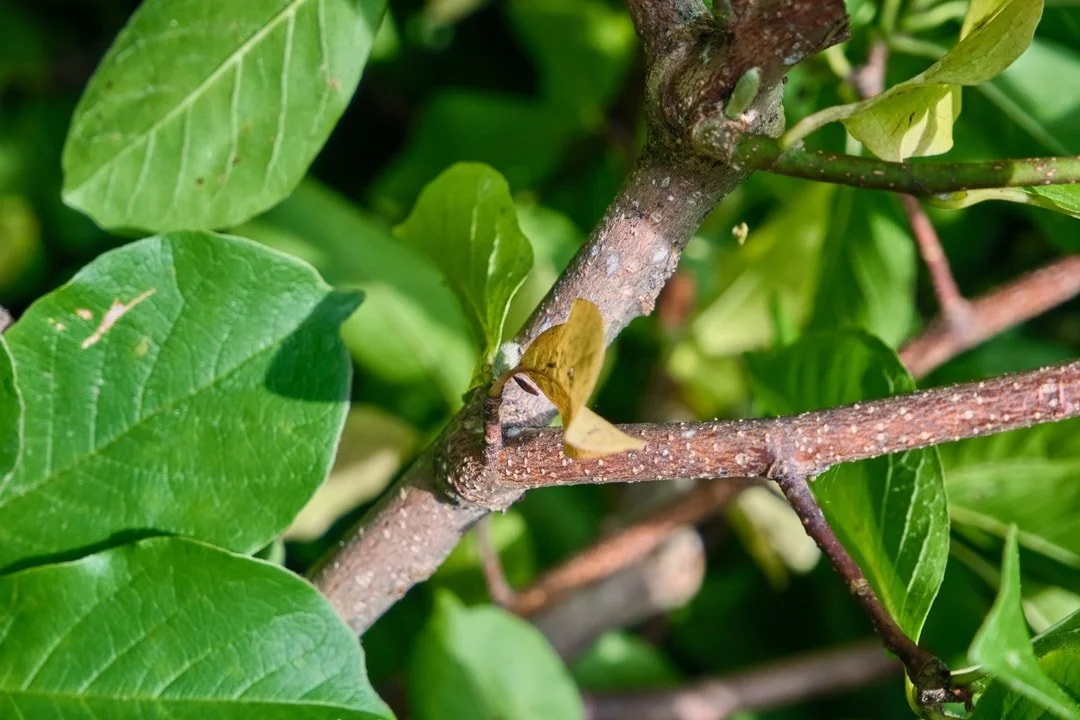
Careful Pruning That Keeps Trees and Shrubs Healthy, Full and Flowering
Many trees and shrubs are sheared into shape when they would do better with careful pruning. We hand prune shrubs, hedges and ornamental trees like dogwoods, magnolias and Japanese maples, timing each cut to protect flowers and keep plants healthy, full and true to their natural form.
Call and we'll take a look and discuss what your plantings need.
Hand Pruning Versus Shearing
Shearing cuts every branch at the same surface with hedge trimmers. It's quick, but over time the effect adds up. Cutting only the outer growth encourages dense twigs at the surface, which shades the inside of the shrub. The interior loses its leaves and dies back, leaving a shell of foliage over bare wood.
Hand pruning removes selected branches back to a joint, thinning the plant and letting light into the center. It keeps the natural shape, maintains leaves throughout the plant, and can be repeated year after year while the shrub stays healthy.
Formal hedges are the exception. A hedge meant to look like a solid wall is sheared by design, and we keep the base slightly wider than the top so the lower branches still get light.
Timing Protects the Flowers
Spring bloomers such as forsythia, lilac, rhododendron and azalea, along with flowering trees like dogwood, magnolia, cherry, crabapple and redbud, set their buds the summer before. We prune them right after they bloom, so next year's display stays intact.
Summer bloomers that flower on new growth are pruned in late winter or early spring. Japanese maples are best pruned while dormant, in late fall or winter, since they bleed sap heavily if cut in spring.
Evergreens vary. Yews and boxwood tolerate a lot of pruning, while most conifers won't regrow from bare wood, so we keep cuts within the green growth. Dead, damaged or crossing branches can come out any time of year.
Pruning Ornamental Trees the Right Way
We don't top trees. Cutting main limbs back to stubs removes the canopy a tree needs to feed itself, forces weak regrowth and leaves wounds that decay over time.
Cuts in the right place. We cut just outside the branch collar, the tissue that seals the wound, rather than flush against the trunk or leaving a long stub. We skip wound paint, since trees seal off damage on their own and sealants can trap moisture.
Less is usually more. Removing more than about a quarter of a tree's live canopy in one season stresses it and triggers weak sprouts. On a valued specimen, spreading the work across two or three seasons reaches the same result while keeping the tree healthy.
Bringing Back an Overgrown Shrub
A shrub that has outgrown its space can often be restored. Many deciduous shrubs respond well to renewal pruning: removing about a third of the oldest stems at ground level each year over three years, so the plant regenerates without ever looking cut back. Some shrubs tolerate a hard cutback nearly to the ground, while others won't survive it, and we'll tell you which approach suits each plant.
Deer and Winter Damage
Deer browse is heavy in Weston, Lincoln, Lexington and Concord, and it shows as stripped lower branches and a distinct browse line. Winter brings salt spray near roads and snow-load breakage on evergreens. Corrective pruning in spring restores the shape, and where a plant is damaged year after year, we can suggest replacements that deer tend to leave alone.
What We Prune
We prune shrubs, hedges and ornamental and flowering trees, including climbing work where the tree calls for it, which lets us work in tight spaces without heavy equipment. Trees growing into utility lines are handled by the utility or a line-clearance contractor, and if a mature specimen shows signs of disease, we recommend a certified arborist's diagnosis first. Removals are covered under tree removal and stump grinding.
Common Questions
When should shrubs be pruned?
It depends on the plant. Spring bloomers right after flowering, summer bloomers in late winter. Pruning at the wrong time can cost a year of flowers.
Can you restore shrubs that have been sheared for years?
Often, yes, over two or three seasons of renewal pruning. Some conifers that have died back inside can't be restored, since they won't regrow from bare wood.
When should I prune a Japanese maple?
Late fall through winter while it's dormant. Avoid spring, when the tree bleeds sap heavily from cuts.
My flowering tree stopped blooming. Why?
Most often it was pruned at the wrong time and the flower buds were removed. Other causes include increasing shade from nearby trees, or extra nitrogen from lawn fertilizer encouraging leaves instead of flowers.
Can you make a tree smaller?
Within limits, and never by topping. Thinning can help modestly. If a tree is simply too large for its location, replacing it with a better-suited species is often the best long-term answer.
How often do trees and shrubs need pruning?
Most shrubs benefit from attention once a year, and formal hedges may need two or three visits. Established ornamental trees usually need pruning every two to three years.