
Paver Patio Installation & Walkways
Paver Patios & Walkways Are Only as Good as The Base
We install paver and natural stone patios, walkways, front entries and steps for homes across the towns west of Boston. Much of the work happens below the surface, in the base that keeps a patio level for years to come. Estimates are free, and we return every inquiry within one business day.
What Goes Into a Lasting Patio
In Massachusetts, the ground freezes, swells and settles again many times between November and March. A patio needs a base that can handle that movement, or within a few winters the joints open, the edges spread and low spots start holding water.
Our process is designed for this climate. We excavate well below finished height, install the base in layers and compact each one, pitch the surface so water moves away from the house, restrain the edges so the field stays in place, and lock the joints with polymeric sand. It's careful, unglamorous work, and it's what keeps a patio looking the way it did on day one.
What We Install
Paver patios
Techo-Bloc, Unilock and Belgard, in a wide range of colors, shapes and finishes. Pavers give a very even surface, install efficiently and stretch the budget further. If a section ever settles or a paver gets stained, individual pieces can be lifted and reset, so repairs stay small.
Bluestone and natural stone
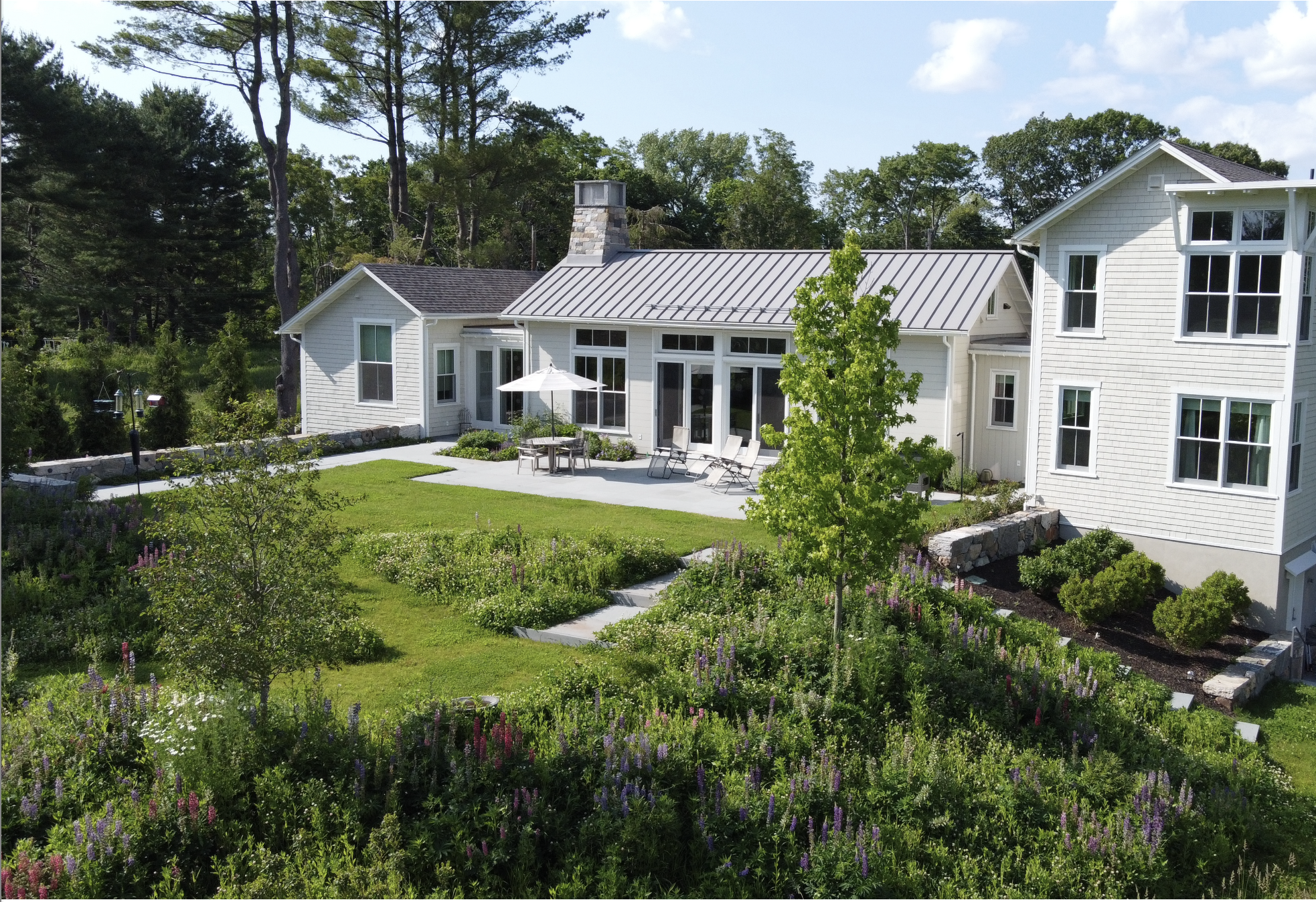
Bluestone, granite and fieldstone, dry-laid over a compacted base or set in mortar on a slab, depending on the site. On the older colonials and farmhouses common in Weston, Lincoln and Concord, natural stone has a character that suits the house.
Walkways, front entries and steps
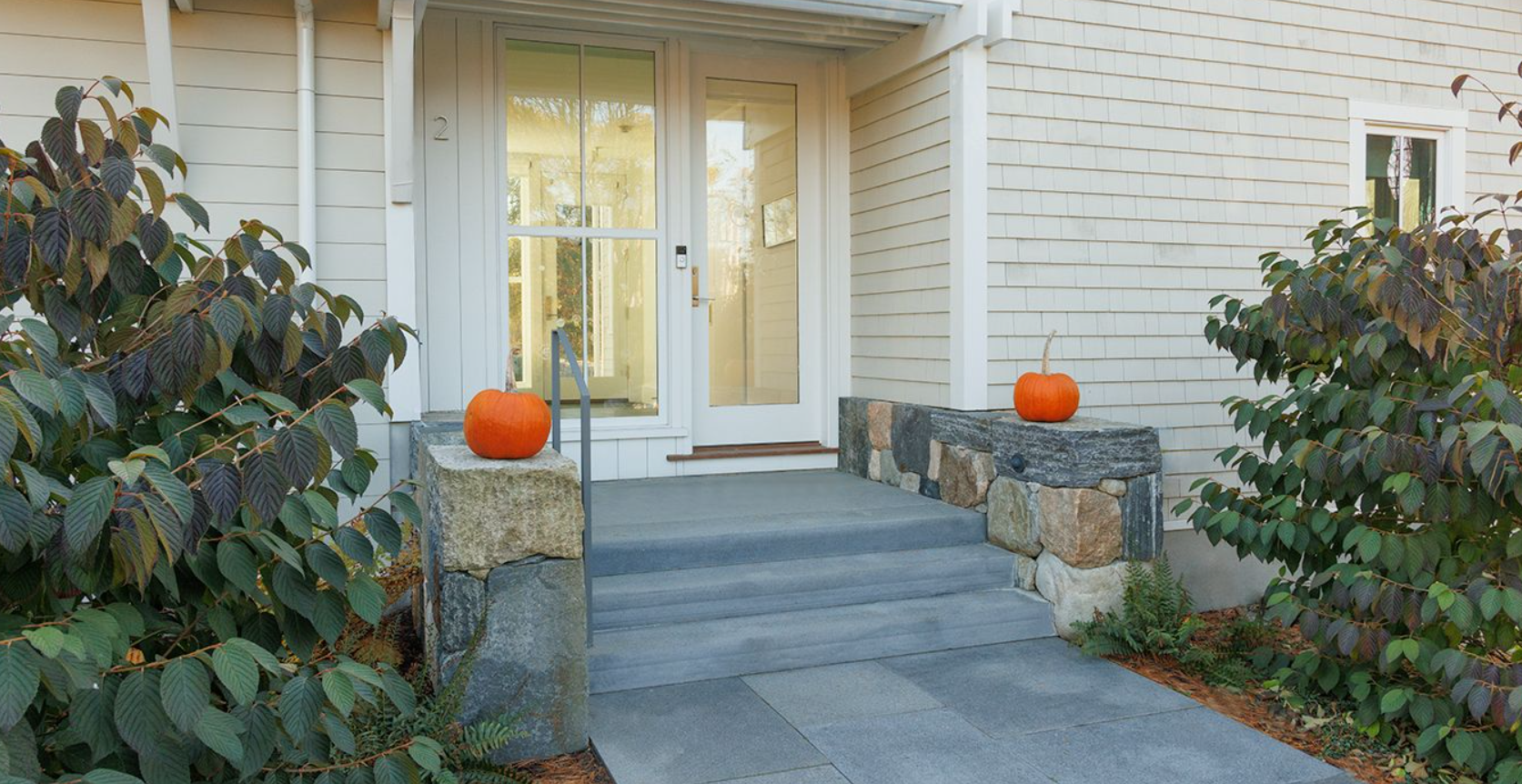
The path from the driveway to the front door is often narrower than it should be, and older steps are frequently uneven. We rebuild entries at a comfortable width for two people walking side by side, with granite or bluestone steps set on footings below frost depth so they stay level through the winter.
Repairs and resets
If an existing patio has settled, heaved or lost its joints, we can often lift the affected section, correct the base and reset the same material for a fraction of the cost of replacement.
Pavers or Bluestone
Pavers are a practical choice for most large patios: an even surface, efficient installation and more square footage for the budget. Natural stone costs more in material and labor, and offers a variation that manufactured products can't quite match.
Many projects use both, with natural stone at the front entry where it's seen up close and pavers for the larger patio out back. We'll talk through the options with you during the site visit and help you choose what suits the house.
How the Job Runs
- We return your inquiry within one business day.
- Site visit, with measurements, a look at grade, drainage and access, and a conversation about how you'd like to use the space.
- A written proposal with layout and material options.
- Samples brought to you, or a visit to the supplier's yard on larger projects.
- Excavation and base, the longest phase and the one that decides how well the patio holds up.
- Installation, cleanup, repair of anything disturbed and a final walkthrough with you.
Drainage Is Part of the Patio
Water is the main reason hardscape fails, so we handle it as part of the job. We pitch the finished surface away from the foundation, and where a yard has standing water or a grade running the wrong way, we correct that first. The grading and drainage work is included in the same project.
What a Paver Patio Costs
Price depends on square footage, material, access, the amount of excavation and grading, and whether steps, walls or lighting are included. That's why we give a firm number after seeing the property.
The factors that move the price most are difficult access, a significant slope, poor soil and natural stone in place of pavers. We'll explain which apply to your property and where scope can be adjusted without compromising the base.
Questions We Get Asked
How long does a patio installation take?
A front walkway typically takes three to five days, and a mid-sized back patio about the same. Larger projects with steps, walls, lighting or significant grading run two to four weeks. Weather and site access affect timing more than anything else.
When is the best time of year to install a patio?
April into November, once the frost is out of the ground. Spring books up first, so if you'd like work done in May, it's worth calling over the winter.
Do I need a permit for a patio in Massachusetts?
A ground-level patio generally doesn't need one in the towns we serve. Retaining walls above a certain height and work near wetlands are different, and we'll let you know during the site visit if your project falls into either category.
How long should a paver patio last?
Decades, when the base is built well. The pavers themselves rarely fail. A base that was too thin or never compacted usually shows within the first few winters.
Can you match an existing patio?
Often, yes. Natural stone is usually straightforward to match. Pavers can be harder if a product line has been discontinued, though most manufacturers keep colors in production for years. A photo or a spare piece helps.