
New Lawn & Sod Installation
A New Lawn That Lasts Starts with the Soil, Whether Using Seed or Sod
A new lawn's long-term success is decided before the seed or sod goes down. We install lawns by seed and by sod, and we put the most care into the soil underneath, where it matters most.
Get in touch and we'll help you decide whether you need a new lawn or a season of overseeding.
A New Lawn Starts Below the Surface
New lawns struggle when the soil underneath hasn't been prepared. New construction is the most common example: topsoil is stripped, the subsoil is compacted by equipment, and a thin layer of loam is spread on top and seeded. The grass looks fine for a season, then declines because there's nothing underneath for the roots to grow into.
We prepare the soil first. That means testing it, relieving compaction, working organic matter into the existing soil, correcting pH, and grading so water drains away. It's the step that determines how the lawn performs for years to come.
Seed or Sod
Seed costs less and offers a much wider choice of grass varieties, which helps match the lawn to the light and soil on your property. It takes a full season to establish, needs consistent watering and can't handle foot traffic while it fills in. It's best sown in early fall.
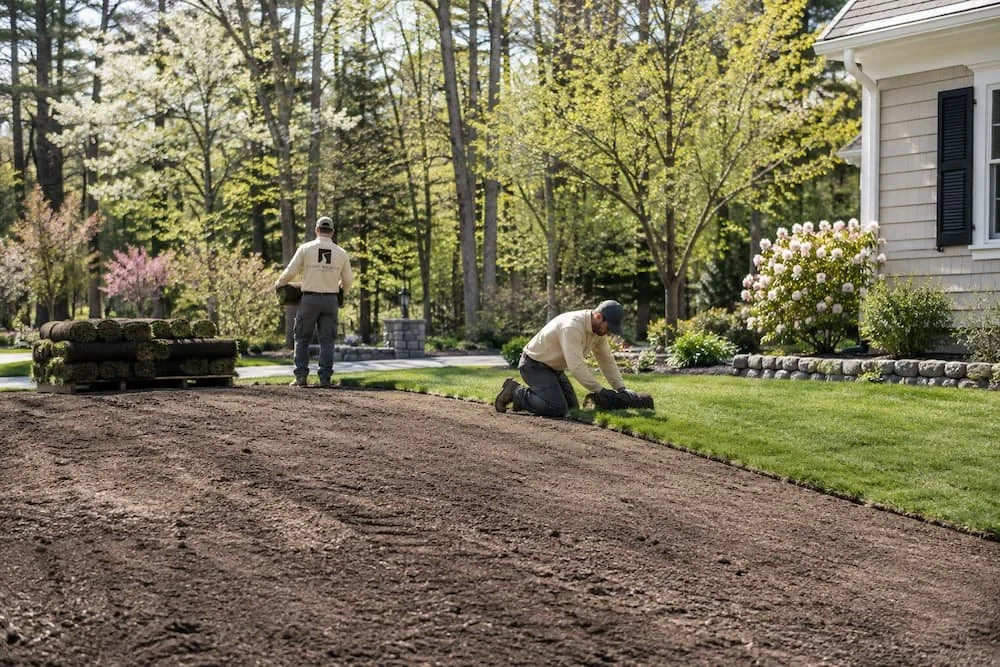
Sod gives you a finished lawn right away, usable within a few weeks, and it controls erosion immediately, which makes it a good choice on slopes. It costs more, comes in fewer varieties that are usually bred for sun, and needs heavy watering while the roots take hold.
Many properties use both: sod in the most visible areas or on slopes, and seed for larger areas out back.
Renovation or Overseeding
If the lawn is thin but still in reasonable shape, aeration and overseeding usually costs less and gets great results. We'll recommend that when it's the better fit.
A full renovation makes sense when weeds have taken over most of the lawn, when the grass is poorly suited to the conditions, when grading or drainage needs to be corrected anyway, or when compaction runs too deep for surface work to reach.
Matching Grass to the Site
When one area of a lawn keeps struggling, the grass is often wrong for that spot. Fine fescues handle shade and lower fertility. Turf-type tall fescue roots deeply and tolerates drought and traffic. Kentucky bluegrass spreads and repairs itself, but it needs sun and water.
Under the mature oaks and maples common in Weston, Lincoln and Concord, sometimes no grass will thrive, and a shade planting bed is the better answer. We'll talk through the options with you.
The First Season Is About Water
Watering is the biggest factor in a new lawn's first season. Seed needs light, frequent watering to keep the surface moist until it germinates, then deeper, less frequent watering to drive the roots down. Sod needs heavy watering for two to three weeks, followed by the same transition. An irrigation system makes this much easier to manage.
Common Questions
When is the best time to install a lawn?
For seed, early fall, from late August into September, when the soil is warm, the air is cooler, moisture is reliable and crabgrass has finished. Sod can go down through most of the growing season as long as it's watered properly.
How long until I can use it?
Sod handles light use in two to three weeks and normal use after about a month. Seed needs a full season before regular foot traffic.
Can you fix a lawn after construction?
Yes. That usually starts with relieving the compaction left by equipment, before anything else is done.
Do you have to remove the old lawn?
For a full renovation, yes. For overseeding, no. Which one fits depends on how much healthy grass is left, and we'll assess that on site.