
Lawn Mowing Service
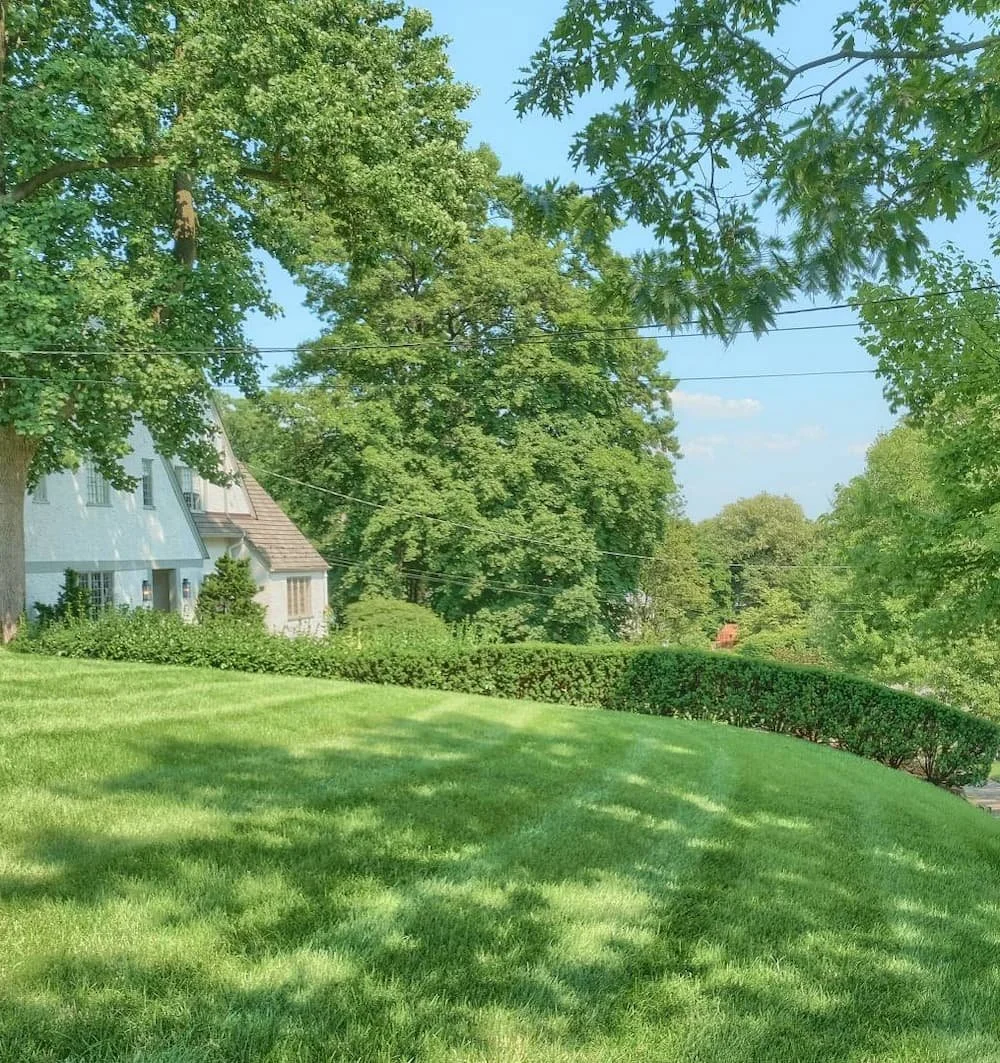
Weekly and Biweekly Mowing for Newton, Wellesley, Weston and Nearby Towns
Lawn mowing is the most frequent thing done to a lawn, and how it's done makes a real difference. Cutting height, blade sharpness and frequency have more effect on how a lawn looks in August than most of what gets applied to it.
We offer weekly and biweekly mowing, and we'd be glad to price the season for you.
Mowing at the Right Height
Grass cut too short looks tidy for an afternoon and then struggles for the rest of the week.
Taller grass grows deeper roots, which carry a lawn through July and August without constant watering. It also shades the soil, which keeps crabgrass seed from germinating. Mowing high is one of the most effective weed controls available, and it costs nothing extra.
We raise the cutting height through the summer heat, when cool-season grasses are under the most stress, and bring it back down for the final cuts of the year.
What the Service Includes
- Mowing at the right height for the grass and the season
- String trimming around beds, trees, walls and structures
- Edging along walkways and driveways
- Blowing clippings off hard surfaces
- Clippings returned to the lawn unless conditions call for bagging
The Details That Make the Difference
Sharp blades - A dull blade tears grass rather than cutting it cleanly. Torn tips turn brown within a day or two and give disease a way in. We sharpen blades on a regular schedule.
Never more than a third - Removing more than about a third of the grass blade at once slows root growth while the plant recovers. That's why weekly mowing matters most during the spring growth surge.
A different direction each time - Changing the mowing pattern keeps grass growing upright and spreads out wear from the mower wheels.
Clippings Stay on the Lawn
Clippings are natural fertilizer. They're mostly water, break down quickly and return a meaningful share of a lawn's nitrogen over the season. They also don't cause thatch, which is a common misconception.
We bag clippings when conditions call for it, such as after a long stretch of wet weather when clumps could smother the turf. Otherwise they go back into the lawn, which fits naturally with an organic program.
Common Questions
Weekly or biweekly?
Weekly during the spring growth surge, roughly May through June. Biweekly is usually enough in midsummer and fall. We set the schedule to what the lawn needs.
Do you mow when it's wet?
We try not to. Wet grass cuts unevenly and clumps, and mowing saturated ground can leave ruts. When the weather leaves no good option, we adjust the schedule.
When does the season start and end?
Typically April into November. The first cut follows spring cleanup, and the last usually lines up with fall cleanup.
Can I sign up for mowing on its own?
Of course. Mowing on its own is one of our most common services. If you'd like to add anything else later, see landscape maintenance for what's available.